The man was reportedly driven on the bonnet of a car from Ashram Chowk to Nizamuddin Dargah in Delhi.
from Zee News :India National
Sunday, 30 April 2023
`His Ego Is Bigger Than Ravana`: Protesting Wrestlers Hit Back At WFI Chief
WFI chief Brij Bhushan Sharan Singh, a BJP MP, is in the eye of a storm after the top Indian wrestlers levelled sexual harassment charges against him.
from Zee News :India National
from Zee News :India National
Meet Visa, Mayfield, DuploCloud and more at Disrupt
TechCrunch Disrupt 2023 takes place on September 19–21 in San Francisco and — if you don’t already know — it’s the startup world’s big tent. It draws founders, investors, CEOs, tech professionals, scientists, policy makers, researchers and entrepreneurs. It’s where you’ll find inspiration, gain knowledge, forge new relationships and discover tools to help you build your business.
Shameless, but helpful, plug: Buy your pass now for significant savings. Prices increase on May 12 at 11:59 p.m. PDT. Who doesn’t like to save money?
Pivotal partners at TechCrunch Disrupt 2023
We’re fortunate to partner with some of the startup world’s leading companies to help make magic at Disrupt. We say fortunate because they’re passionate, thoroughly engaged and hands-on. They consistently deliver highly relevant content, educational expertise, resources and connection to the event. Their participation elevates, engages and supports early-stage founders.
Our partners also come to Disrupt to connect and explore opportunities with other companies within the startup ecosystem. They form alliances, forge partnerships, and look for potential investments, and sometimes they become a startup’s new client. Be sure to make time to meet, greet and network with our partners.
Here’s an early look at just some of our partners who will be on hand to help you move your early-stage startup to the next level. We’ll announce many more in the coming weeks.
Don’t miss out on the invaluable startup insights that Dealmaker, Helm.ai, Mayfield and Visa will bring to the stage during breakout sessions. Connect with other attendees in small group roundtable sessions with LatinX Startup Alliance, Mayfield and Otter.ai.
You’ll find plenty to discover on the exhibition floor, too, with Builder.ai, DuploCloud, Hedera, InvestHK, Platform.sh, Remote Technology Services, Yatta and others showing off their latest technologies, discussing how you can engage more with their companies and offering everyone’s favorite: swag! Plus, for the second year running, JetBlue Technology Ventures will be front and center connecting with female founders at the Women of Tech(Crunch) reception.
Oh, and if that bounty isn’t enough to whet your startup appetite, check this out. Visa will hold the finals of the Visa Everywhere Initiative 2023 global competition at TechCrunch Disrupt. Stop by to meet and greet the finalists at the TechCrunch Disrupt Pavillion on the exhibition floor.
And finally, you won’t have to worry about dead device batteries while you’re at Disrupt — just plug into one of the charging stations courtesy of Brex, and you’ll be good to go.
TechCrunch Disrupt 2023 takes place on September 19–21 in San Francisco, and our partners will help make it the best one yet. Don’t forget, prices go up on May 12 at 11:59 p.m. PDT. Buy your pass now and save.
Is your company interested in sponsoring or exhibiting at TechCrunch Disrupt 2023? Contact our sponsorship sales team by filling out this form.
Meet Visa, Mayfield, DuploCloud and more at Disrupt by Lauren Simonds originally published on TechCrunch
from TechCrunch
Saturday, 29 April 2023
Elon exposes his burner, Tile embraces the cat life, and Elizabeth Holmes avoids prison
Hey, TechCrunch people. If you’re looking for a recap of the week’s news in tech, you’ve come to the right place. It’s Week in Review (WiR), TechCrunch’s regular recap column. Glad to have you.
Before we get on with the meat of it, a PSA that tickets for TechCrunch Disrupt 2023 are available now. Disrupt, of course, is TechCrunch’s flagship in-person event, focused on founders, investors and the future of tech year after year. In San Francisco on September 19–21, expect to hear from thought leaders in the fields of AI, fintech, hardware, sustainability, SaaS, security and more. It’ll be well worth the trip.
In the nearer term, tune into the next TechCrunch Live show, which will spotlight Cambrian BioPharma, a startup billing itself as a pharmaceutical outfit with a revolutionary approach to managing drug development. Founder James Peyer will be joined by Maryanna Saenko of Future Ventures, who invested in Cambrian’s Series A, B and C rounds.
Now, without further ado!
most read
Elon exposed: Elon Musk tweeted a photo on Monday night that showed him logged into his Twitter account, advertising to content creators how they can activate monetization features on Twitter. Unfortunately for Musk, people weren’t paying much attention to the fact that he has 24.7K paid subscribers — instead, some users realized that he appeared to be logged into another account, Amanda writes — possibly his burner. Oops.
SpaceX finds success in failure: SpaceX launched a fully integrated Starship launch vehicle for the first time last Thursday, a long-awaited and highly anticipated milestone in the vehicle development program. Despite its fiery fate, the test was a success, Aria reports: SpaceX got tons of valuable data that will inform future Starship and Super Heavy prototypes.
Tile, but for cats: Tile, the AirTag rival now owned by Life360, this week launched a new cat-tracking tag to help pet owners find their furry friends. The new device, “Tile for Cats,” is essentially a modified version of the Tile Sticker with a silicone collar attachment that costs $39.99. Ivan has more.
Epic loss: Apple has won its antitrust-focused appeals court battle with Fortnite maker Epic Games over its App Store policies, Sarah reports. The U.S. Ninth Circuit Court of Appeals largely upheld the district court’s earlier ruling related to Epic Games’ antitrust claims in favor of Apple, but it also upheld the lower court’s judgment in favor of Epic under California’s Unfair Competition Law.
Holmes avoids prison: Theranos founder Elizabeth Holmes will not be heading off to prison this week to begin serving an 11-year sentence, as first reported by the WSJ. Though earlier this month U.S. District Court Judge Edward Davila denied her request to remain free while she appeals her conviction, this week she asked the Ninth U.S. Circuit Court of Appeals directly if she could stay out of prison while her case makes its way through the appeals process; the request automatically puts her reporting date on hold while the court considers her request, writes Connie.
Protestors sting back: A Missouri government tip site for submitting complaints and concerns about gender-affirming care is down after people flooded it with fanfiction, rambling anecdotes and the “Bee Movie” script. The Missouri Attorney General’s office launched the online form for “Transgender Center Concerns” in late March, inviting those who’ve witnessed “troubling practices” at clinics that provide gender-affirming care to submit tips, Morgan reports.
Twitter pushes advertisers to pay up: As Twitter’s legacy blue check mark system finally comes to an end, the social network’s new paid-for verification system is causing more than a little chaos, with CEO Elon Musk himself stepping in to pay for some celebrities’ verification when they refuse to do so. However, another little nugget to emerge from the carnage this week is that anyone looking to advertise on Twitter will now seemingly have to have a verified account, Paul reports.
WhatsApp across devices: WhatsApp is finally rolling out multidevice login support for more than one phone. Mark Zuckerberg announced the feature’s rollout on Facebook and Instagram, clarifying that users can log into the same WhatsApp account on up to four phones. Until now, you could only use one WhatsApp account on one phone and multiple companion desktop devices.
audio
TechCrunch is cross-medium, in case you weren’t aware. The crew maintains a fantastic (in this writer’s humble opinion) slate of podcasts for your edification and enjoyment — so consider giving them a listen if you haven’t already. This week on Equity, Ankur Nagpal, the entrepreneur behind Teachable, Ocho and Vibe Capital, spoke about the future of solo GPs; how Ankur built, sold, pivoted and launched in public; and the importance of brand and succession. And Found — live from TechCrunch’s Early Stage event in Boston — was joined by Russ Wilcox, who founded E Ink and is currently a partner at Pillar VC.
TechCrunch+
TC+ subscribers get access to in-depth commentary, analysis and surveys — which you know if you’re already a subscriber. If you’re not, consider signing up. Here are a few highlights from this week:
Slow revenue growth: Public tech firms are for the most part on a moderate pace of trailing growth in the most recent fiscal quarter. Alex breaks down what that means — as well as the broader implications.
Founders change their pitch: More and more founders are adapting their pitches and business strategies to be more downturn-friendly, Natasha M writes. Now that it’s been over a year since tech’s current period correction first began, founders are getting more innovative in how they approach breaking their pitch.
Capital efficiency is the new VC filter for startups: Igor Shaversky, a partner at Waveup, writes about which metrics startups should track to understand where they stand on the capital efficiency scale.
Elon exposes his burner, Tile embraces the cat life, and Elizabeth Holmes avoids prison by Kyle Wiggers originally published on TechCrunch
from TechCrunch
Senior Kashmir Cop Holds Meeting On Vehicle-Borne IED Threat
The meeting chaired by ADGP Kashmir Vijay Kumar also discussed security challenges for the upcoming G-20 Summit meetings in J&K and Shri Amarnath Yatra 2023.
from Zee News :India National
from Zee News :India National
Meet Shabbir Hussain Khan, `Blood Man Of Kashmir` Saving Lives Since 1980
Shabbir Hussain Khan has donated 182 pints of blood over the last four decades, which is the highest blood donation by anyone in Jammu and Kashmir.
from Zee News :India National
from Zee News :India National
Friday, 28 April 2023
J&K: Model G20 Summit Held In Srinagar, 60 Participants Attend Event
Jammu and Kashmir Government's Department of Tourism hosted the Model G20 Summit at SKICC Srinagar.
from Zee News :India National
from Zee News :India National
#NotMyAI and other TC news
Snapchat Rolled out their generative AI chatbot, My AI to their 750 million monthly users so it feels like the right time to pause and ask whether we’re ready for the real thing – and ready or not, whether anybody wants one. This week on the TechCrunch Podcast, we’re talking to TechCrunch reporter Amanda Silberling about making robot friends on the internet.
Articles from the episode:
- Snapchat’s AI chatbot is now free for all global us
- Snapchat sees spike in 1-star reviews as users pan the ‘My AI’ feature, calling for its removal
- Missouri trans ‘snitch form’ down after people spammed it with the ‘Bee Movie’ script
- SpaceX’s successful failure is a wake-up call for Starship’s timeline
- Google’s Bard AI chatbot can now generate and debug code
- Apple wins antitrust court battle with Epic Games, appeals court rules
#NotMyAI and other TC news by Darrell Etherington originally published on TechCrunch
from TechCrunch
`Will Obey`: Justice Gangopadhyay As SC Removes Him From Hearing Case
The Supreme Court on Friday asked the Calcutta High Court Chief Justice to take away Trinamool MP Abhishek Banerjee`s case from the court of Justice Gangopadhyay.
from Zee News :India National
from Zee News :India National
Thursday, 27 April 2023
YouTube Music officially rolls out podcasts for listeners in the US
YouTube Music is officially adding podcasts to its platform in the United States on Android, iOS and the web. The rollout comes a few months after YouTube podcasting head Kai Chuk revealed that podcasts would be added to YouTube Music soon.
The update allows users watching podcasts on the main app to continue listening to them on YouTube Music. The company notes that all users call listen to podcasts on-demand, offline, in the background, while casting and seamlessly switch between audio-video versions on YouTube Music.
“This podcast listening experience is different from our music listening experience where you need a Premium or Music Premium subscription to enjoy some of these features,” the company wrote in a blog post. “This new podcast listening experience complements the podcast video experience on YouTube.”
Podcasts in YouTube Music will be available regardless of whether you have a YouTube Premium subscription. YouTube even notes that paying customers may encounter host-read endorsements or sponsorship messages when listening to podcasts on YouTube Music.

Image Credits: YouTube
YouTube is rolling out the update to all of its listeners in the United States gradually, which means not everyone may see it just yet. The company said it plans to bring podcasts to YouTube Music to users outside of the United States soon, but didn’t provide any specific launch details.
The YouTube Music Home tab now includes a new “Podcasts” tab that takes you to a dedicated feed, which will show you your favorite podcasts and recommended episodes.
YouTube is advising creators that if their podcast is audio-only, they should consider uploading a video with a static image, or use audiograms or other dynamic video formats. The company notes that it will soon offer creators the option to directly upload their audio podcasts via RSS feeds to both YouTube and YouTube Music.
According to previous reports, YouTube isn’t looking to sign exclusive deals with podcasters, which has been a key strategy at Spotify. YouTube instead seems to be focused on melding the experience of listening to podcasts on video and audio.
YouTube Music officially rolls out podcasts for listeners in the US by Aisha Malik originally published on TechCrunch
from TechCrunch
Google tests a new ad slot on the Play Store ahead of its I/O developer conference
Google has been spotted testing a new Play Store ad slot ahead of its I/O developer conference in May. If rolled out publicly, the change could significantly expand the company’s Play Store search ads business by offering developers access to new prime real estate for their app marketing efforts.
The test comes two years ago after Apple made a similar move with the addition of a new ad slot that appeared on the store’s Search tab itself, instead of only at the top of search results, as before.
Similar to Apple, Google is also testing an ad slot that appears when Android users navigate to the Play Store’s search menu, where they can type in keywords to find apps. The test was first spotted by the Android news site, Android Police, which noted that Google had been testing app “recommendations” in this slot as of late last year. When queried about those app promos at the time, Google had clarified they weren’t ads, just personalized suggestions.
Now, that’s changed as the same spot includes both app recommendations and suggestions that are actually labeled as ads. (A few examples can be found in this Twitter thread here.) The ads aren’t yet showing for everyone, however, which indicated this was likely a test, as Google has since confirmed.
Users have reported seeing the test in multiple markets worldwide, so it’s not a U.S.-only update.
Yes.
Google Play Store is showing ads in search bar. pic.twitter.com/Pmf0Q1EPb8— Sumanth
(@sumanthmee) April 25, 2023
Reached for comment, a Google spokesperson vagued confirmed the experiment by noting the company tests new features on the Play Store from time to time. However, they didn’t offer any further information about this specific ad test — a possible indication Google doesn’t want to spoil a planned announcement. Or perhaps, there’s no determination yet on an ETA for a public launch.
“We regularly test new features and ad formats to improve app discovery for Play users and help developers reach their audience, but don’t have anything specific to announce right now,” a Google spokesperson told TechCrunch.
Finding a new way to pull in revenue from Play Store ads could help Google boost its bottom line at a time when it’s had to make concessions on Play Store commissions. Due to new regulations and pressure from lawmakers, Google has been rolling out third-party billing options to global markets, offering developers reduced fees if they don’t use Google’s own billing services. Spotify has been an earlier adopter of the program, and dating app Bumble is also planning to participate.
The availability of new Play Store search ad slots could significantly impact Play Store revenues, if roled out broadly. When Apple introduced new App Store ad slots last year in less prominent locations, experts forecast the change could generate another billion in revenue for the tech giant, for example. Google doesn’t break out the size of its own Play Store Ads business, but it’s also likely a sizable figure. Data from Statista had estimated Google Play generated approximately $48 billion in 2021 through mobile apps. However, unsealed court filings in a Google antitrust case revealed Google Play app store revenue hit $11.2 billion in 2019.
Google tests a new ad slot on the Play Store ahead of its I/O developer conference by Sarah Perez originally published on TechCrunch
from TechCrunch
`Free Travel For Women In Karnataka`: Rahul Gandhi Announces Another Poll `Guarantee`
In the run up to Karnataka Assembly Elections, Congress leader Rahul Gandhi on Thursday announced free bus services for women if his party comes to power.
from Zee News :India National
from Zee News :India National
Wednesday, 26 April 2023
Mark Cuban-backed streaming app Fireside confirms $25M Series A at $138M valuation
Fireside, the Mark Cuban-backed interactive entertainment app, has now confirmed its $25 million Series A, valuing the business at $138 million, post-money. The company had been rumored to be raising at a $125 million valuation last year, after attracting a number of high-profile creators to its streaming platform for live and virtual shows. The funding and valuation were confirmed through Fireside’s recent investor update, obtained by TechCrunch, which also mentions new strategic investors like Paris Hilton and others, and offers a first look at its interactive streaming technology for smart TVs.
The latter is made possible through last year’s acquisition of the streaming TV platform Stremium. At the time, Fireside confirmed the deal would help it to accelerate its plans, saying it would be the “only platform that turns creators, celebrities, brands, and IP owners into the studio, networks and streaming services of the future.”
The company hopes to soon bring its interactive technology to smart TVs, Fire TV, Apple TV, and Roku, where viewers could watch content on the big screen and engage via their phone, while their comments would display on the TV.
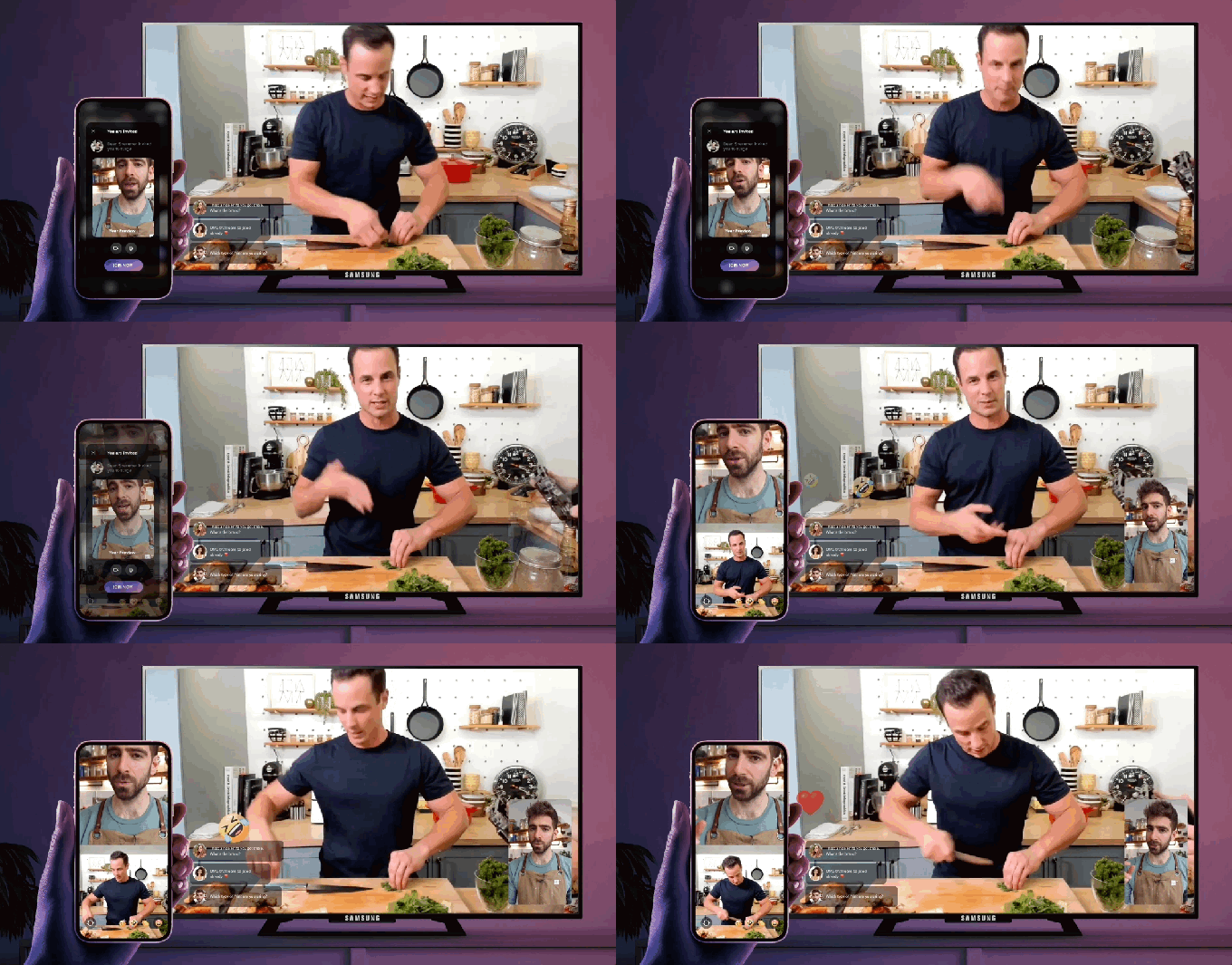
Image Credits: Fireside
Reached for comment, Fireside confirmed the investor update’s accuracy but said it has nothing more to add at this time.
The update confirms the earlier reporting that Fireside’s Series A had closed, which it had yet to officially announce.
It also confirms the newly added strategic investors, including Paris Hilton, Tim Connors from PivotNorth, Zeke Bronfman + Evan Abraham, Redbeard Ventures, and David DeVoe.
Though Fireside had once been compared to other live platforms like Twitter Spaces or Clubhouse, those comparisons weren’t at all accurate. Not only does Fireside differentiate itself with its focus on streaming interactive videos, the shows on its platform can also be recorded, saved or even simulcast to other social networks.
Plus, the app includes a number of audience engagement tools and other features to aid creators with promotion, editing, measurement, distribution, monetization, and audience growth, which are part of its end-to-end content production experience.
Co-founded by Cuban, early Yammer employee Mike Ihbe, and former Googler, YouTuber, and Node co-founder Falon Fatemi, who sold her last company to SugarCRM, Fireside has attracted high-profile creators, including Jay Leno, Michael Dell, Melissa Rivers, Craig Kilborn and screenwriter and “Entourage” creator Doug Ellin.
In the investor update, the company also references popular Hollywood medium, Tyler Henry, as one of its creators, saying his network has grown to “tens of thousands of members globally” who connect with him “multiple times per month.”
The startup is also going to have a Hollywood moment of its own, as reality TV star Heather Dubrow from Bravo’s The Real Housewives of Orange County will launch a lifestyle network, the HD Network, on Fireside on May 9th. That’s given Fireside a bit of a promotion as part of The Real Housewives of Orange County Season 17, where both Fatemi and Cuban will appear.
Also thanks to its integration with Stremium, Fireside will be onboarding other partners to its platform. The deal brings “over 100 new networks” with “24/7 broadcasting live interactive programming.” This includes names like USA Today, ArtFlix Movie Classics, Billiard, Boxing, Ted Talks, Docurama, English Football, eSports, Global Fashion Channel, InspireFlix, Law & Crime, MMA, and others.
These channels will have an “On Now” indicator in the Fireside app, allowing users to watch alongside other audience members and react and comment.
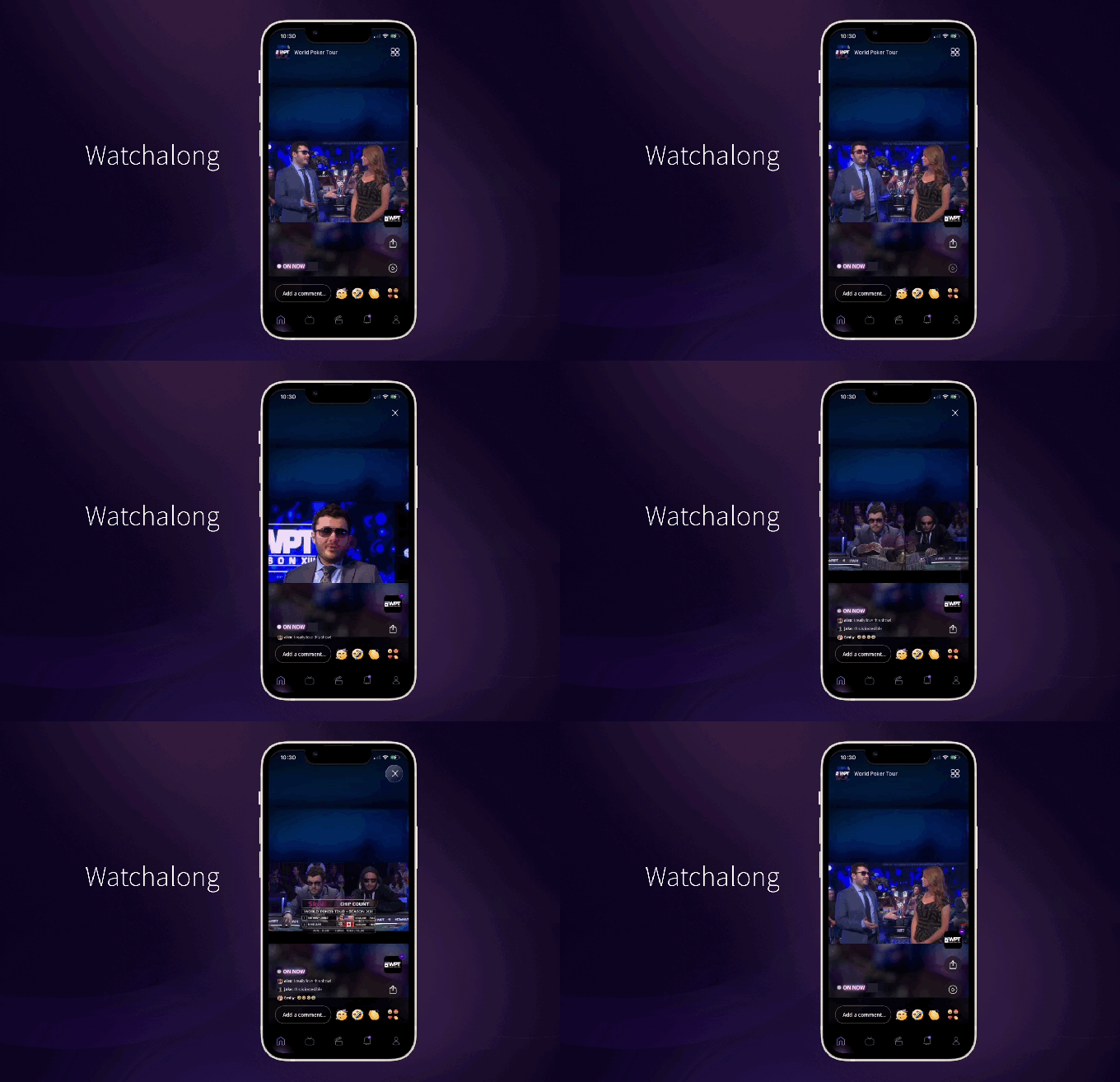
Image Credits: Fireside
This technology is something that’s been popular in other streaming apps outside the U.S., like Rakuten’s Viki, which allows users to watch and react to shows in real time. More recently, a new streaming service Mansa, focused on Black culture, added a similar feature.
The investor update also mentioned that talent, brands, and IP Owners can make a minimum of $35 million in annual recurring net new revenue stream in their first year on Fireside. The company said it’s now seeing a “minimum of $100K” within the first hours of a stream’s launch.
Creators are able to monetize their shows by selling tickets or inserting advertising. The company had also explored web3 technologies, like NFTs — though those were not referenced in this latest update.
Ahead of its Series A, Fireside had raised around $8 million. In addition to Cuban himself, other investors in Fireside include the Chainsmokers, HBSE, Goodwater, Animal Capital, NFL stars Larry Fitzgerald and Kelvin Beachum, and former NBA star Baron Davis. The company says it’s aiming to reach profitability this year and is being evaluated for a Series B where it will look to include international strategic investors in order to expand globally.
Mark Cuban-backed streaming app Fireside confirms $25M Series A at $138M valuation by Sarah Perez originally published on TechCrunch
from TechCrunch
Hackers are breaking into AT&T email accounts to steal cryptocurrency
Unknown hackers are breaking into the accounts of people who have AT&T email addresses, and using that access to then hack into the victim’s cryptocurrency exchange’s accounts and steal their crypto, TechCrunch has learned.
At the beginning of the month, an anonymous source told TechCrunch that a gang of cybercriminals have found a way to hack into the email addresses of anyone who has an att.net, sbcglobal.net, bellsouth.net, and other AT&T email addresses.
According to the tipster, the hackers are able to do that because they have access to a part of AT&T’s internal network, which allows them to create mail keys for any user. Mail keys are unique credentials that AT&T email users can use to log into their accounts using email apps such as Thunderbird or Outlook, but without having to use their passwords.
With a target’s mail key, the hackers can use an email app to log into the target’s account and start resetting passwords for more lucrative services, such as cryptocurrency exchanges. At that point it’s game over for the victim, as the hackers can then reset the victim’s Coinbase or Gemini account password via email.
The tipster provided a list of alleged victims. Two of the victims replied, confirming that they have been hacked.
AT&T spokesperson Jim Kimberly said that the company “identified the unauthorized creation of secure mail keys, which can be used in some cases to access an email account without needing a password.”
“We have updated our security controls to prevent this activity. As a precaution, we also proactively required a password reset on some email accounts,” the spokesperson said.
AT&T declined to say how many people have been hit in this wave of hacks. But the company, “as a precaution,” has locked some email accounts, forcing their owners to reset their passwords.
“This process wiped out any secure mail keys that had been created,” the spokesperson added.
One victim told TechCrunch that hackers stole $134,000 dollars from his Coinbase account. The second victim said that “it has been happening repeatedly since November 2022 — probably 10 times at this point. I notice it has been done when my Outlook client fails to ‘connect’ and I quickly login to my [AT&T] site and delete their key and create a new one.”
“Very frustrating because it is obvious that the ‘hackers’ have direct access to the database or files containing these customer Outlook keys, and the hackers don’t need to know the user’s AT&T website login to access and change these outlook login keys,” the victim added.
Also, several people with AT&T and other related email addresses said on Reddit that they have been hacked.
“Hello, my email was compromised back in March of this year and I have done everything I can to reset password, security questions, etc but occasionally I’m still getting emails that a secure mail key has been created on my account without my knowledge,” one user wrote. “They would even delete the email notification so I don’t see it but I recently changed to another email for profile updates so they don’t have access. This sounds like someone still has access to my account but how?”
Another person wrote: “I’ve had the same issue for months and just started again, password wasn’t changed but account locked out and a Mail Key keeps being created somehow.”
The tipster claims that the hackers can”’reset any” AT&T email account, and that they have made between $15 and $20 million in stolen crypto. (TechCrunch could not independently verify the tipster’s claim.)
TechCrunch has seen a screenshot apparently coming from a Telegram group chat, where one of the hackers claims that the gand “have the entire AT&T employee database,” which allows them to access an internal AT&T portal for employees called OPUS.
“Only thing we are missing is a certificate, which is the last key to accessing the [AT&T] VPN servers,” the hacker wrote in the Telegram channel, according to the screenshot
The tipster said that the gang now has access to AT&T’s internal VPN.
Kimberly, the AT&T’s spokesperson, denied that the hackers had any access to internal company systems. “There was no intrusion into any system for this exploit. The bad actors used an API access.”
Do you have more information about these hacks against AT&T email users? Or other similar hacks? We’d love to hear from you. You can contact Lorenzo Franceschi-Bicchierai securely on Signal at +1 917 257 1382, or via Wickr, Telegram and Wire @lorenzofb, or email lorenzo@techcrunch.com. You can also contact TechCrunch via SecureDrop.
Hackers are breaking into AT&T email accounts to steal cryptocurrency by Lorenzo Franceschi-Bicchierai originally published on TechCrunch
from TechCrunch
J&K LG Inaugurates 1,208 Flats For Kashmiri Pandit Employees
J&K LG inaugurated these flats at the new migrant colony in the Khwaja Bagh area of Baramulla, while he e-inaugurated the remaining accommodations at Bandipora, Ganderbal and Shopian.
from Zee News :India National
from Zee News :India National
Revolut’s valuation troubles signal a stormy horizon for less-profitable neobanks
While the banking world watches American lender First Republic publicly convulse after its earnings report detailed a widespread evaporation of its deposit base, the startup world of neobanks is taking blows as well.
Earlier this week, Revolut, a highly-valued, UK-based neobank saw its valuation decline by some 46% in the eyes of one of its backers.
The Exchange explores startups, markets and money.
Read it every morning on TechCrunch+ or get The Exchange newsletter every Saturday.
Given that Revolut last raised $800 million at a $33 billion valuation in mid-2021, it stands to reason that it was likely overvalued at the time — show us a nine-figure startup round from those times that fits neatly against today’s valuation marks and we’ll buy you a smoothie.
But Revolut getting such a sharp valuation cut nearly two years after it was last priced made us sit up and take notice.
There was a time when the neobank-for-x-market was amongst the most popular startup models, after all. Mountains of capital were invested into dozens of global startups looking to reinvent or at least revamp consumer and SMB banking. It even led to some liquidity, including the massive Nubank IPO and its resulting 11-figure valuation.
Revolut’s revaluation raises a few questions: How much trimming is there left to do in the fintech world? And, are we likely to see something similar more generally in the neobanking startup sector?
This morning, we’re parsing what happened in venture in Q1 2023 as well as a handful of data points from F-Prime’s fintech index and resulting reports. Then, we’ll cover the most recent neobank financial results we have, and come to a conclusion on how much pain — or how little — neobanks can expect in the months ahead. To work!
 Money in, money out
We have fintech funding data from CB Insights for Q1 2023, but it comes with a huge asterisk. Without additional context, funding to fintech startups increased 55% from the fourth quarter of 2022, making for a global tally of $15 billion.
The caveat, though, is that Stripe’s latest $6.5 billion raise alone accounted for more than a third of that sum. If you exclude that round, the tally comes down to $8.5 billion, which represents a 12% quarter-on-quarter decline.
That’s the big picture. Looking at the fintech cohort more closely, we are curious about which categories outperformed others. Data of that kind on private companies is hard to come by, but we have some interesting insights on public companies.
Revolut’s valuation troubles signal a stormy horizon for less-profitable neobanks by Anna Heim originally published on TechCrunch
from TechCrunch
Noida: 100 Private Schools Fined Rs 1 Lakh For Not Returning Exorbitant Fees
Allahabad HC had directed schools to return 15 per cent of the fees to all students which were charged during the 2020-21 Covid-19 period.
from Zee News :India National
from Zee News :India National
Tuesday, 25 April 2023
Bobsled raises $17M Series A to make cross-cloud data sharing easier
Bobsled, a startup that is building a cross-cloud data sharing platform, today announced that it has raised a $17 million Series A funding round co-led by Greycroft and Madrona Venture Group. This round follows a $7 million seed round led by .406 Ventures. In this most recent round, Bobsled’s valuation was $87 million.
Prior to founding Bobsled in late 2021, the company’s CEO and co-founder Jake Graham was a principal product manager at Microsoft Azure, working on the Azure Data Exchange. Graham, who also previously worked at Neo4j and Intel, believes that data sharing is going to be a fundamental change in the analytics landscape.
“It’s the next evolution of how companies actually get access to the data that they need to drive machine learning analytics, data science, what have you,” he said. “I’ve been building in the data infrastructure space for about a decade and that APIs and SFTP were the way in which data moved was just one of those things that I accepted. It wasn’t until I really started digging into it that I was: it shouldn’t be. This doesn’t make a lot of sense. These are built for a previous paradigm of data.”
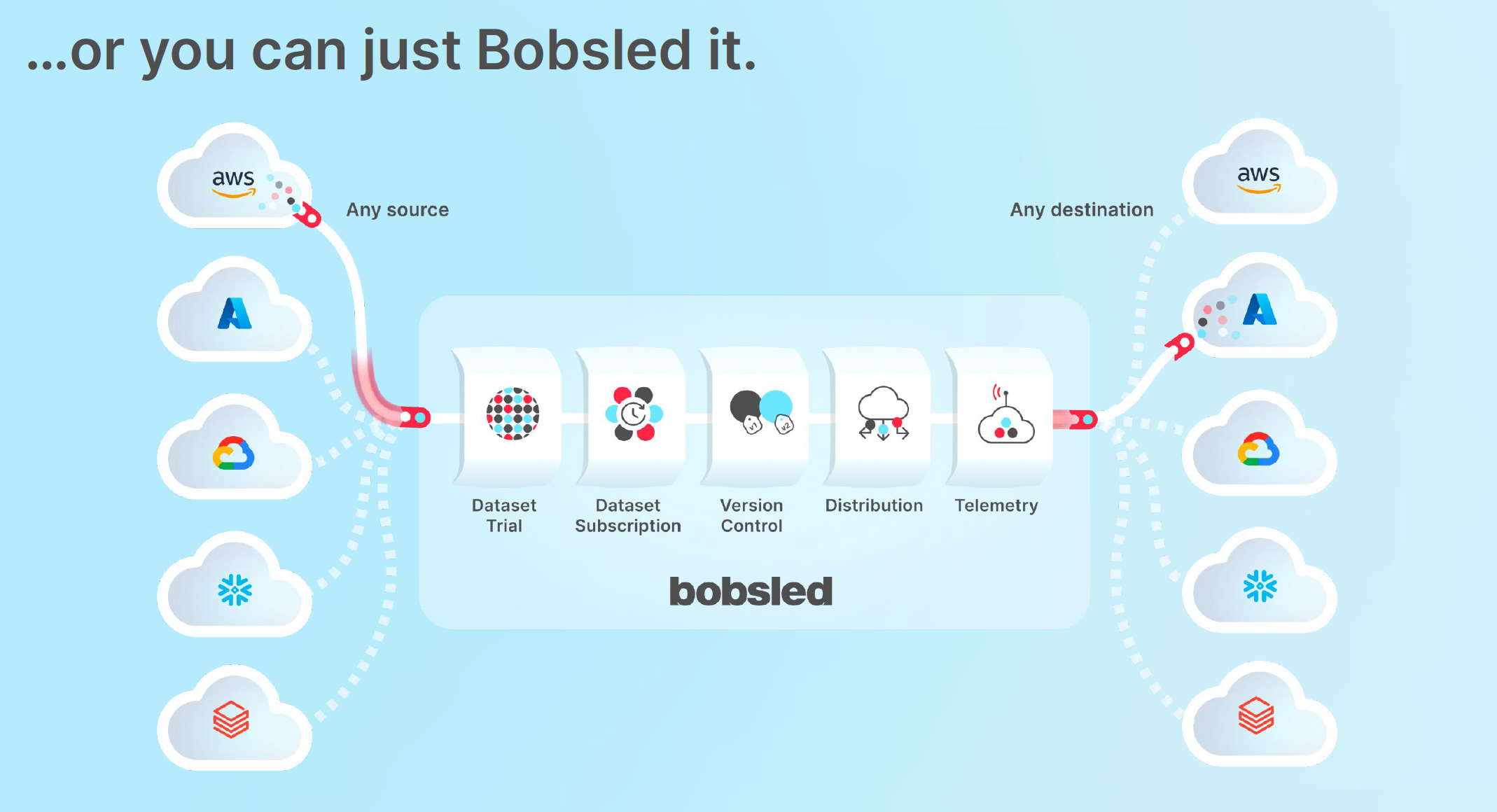
Image Credits: Bobsled
Graham also believes that it’s important for the clouds and data platform to create the building blocks of what a native sharing protocol should look like.
“If you believe that data sharing is the way the world is going to go and that there’s going to be much more active collaboration on data between source and destination, you kind of need there to be something that brings all of these different platforms together, because there’s not one right cloud, there’s not one right data warehouse, there’s not one right layer of the stack for it to make data sharing happen,” he said.
Bobsled, unsurprisingly, believes that it can be this neural, third-party data sharing platform that can allow businesses to connect their various data sources in a more native way. The service uses each platform’s sharing protocol and then connects the various sources and helps businesses prepare the datasets for querying them.
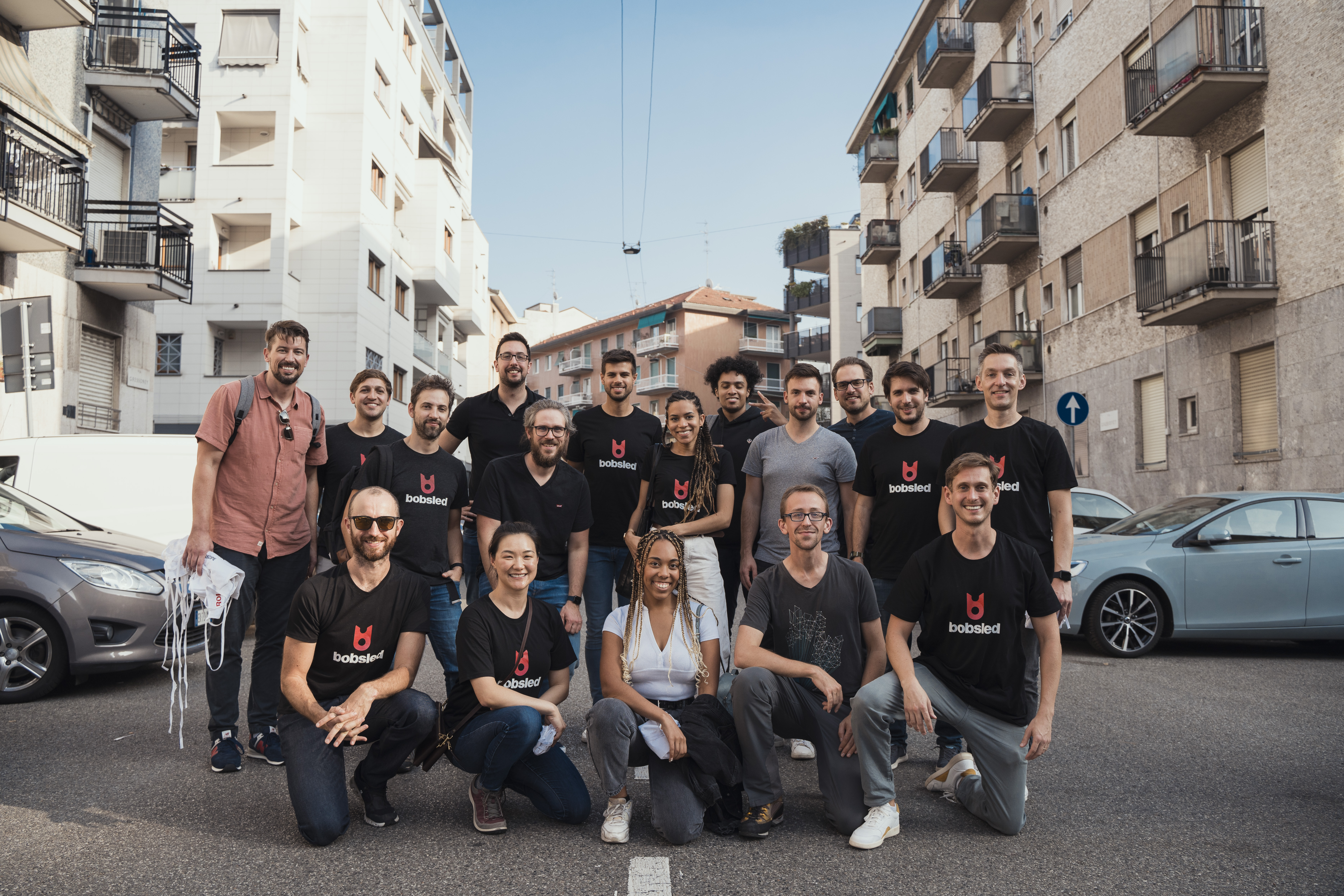
Image Credits: Bobsled
Some of the common use cases here are SaaS applications that may want to share application data from AWS S3 into a customer’s Azure storage, for example, or a data team that wants to move sales data from Azure to S3 for analysis.
Obviously, there are other companies that focus on this kind of data transfer and data transformation space. But Graham believes that with these ELT platforms like Fivetran, the consumer still has to do too much work. “A lot of what actually is being done by ELT platforms should be done by the source of the data,” he said. “So we’re shifting left a lot of that. If you pull apart the letters, extract: you’re doing that because it’s not being shared with you. Load? Same thing. If you’re getting a share within Databricks, you’re not loading into anything.” As for transforming data, he noted that most of the time, the data is in a transactional data model that needs to be formatted for analysis and the source should transform that data — though he believes that transforming the data from multiple data sources to match a given scheme is always going to be up to the consumer.
“I wouldn’t call us directly an ELT product yet because we’re different enough, but I think that’s the closest thing to the category that we’re building. It’s just a different user,” Graham explained.
The company plans to use the new funding to build out its platform, mostly with a focus on support for more data sources (including old-school SFTP sources).
“The promise of AI only heightens the urgency and increases the priority for companies to realize the value of their data,” said Madrona Managing Director S. Somasegar. “Even within enterprises and amongst partners, that data is now spread across platforms not designed to work together. Bobsled‘s unique cross-cloud data sharing focus will unlock the value of data that has been complex, slow and expensive to access until now.”
Bobsled raises $17M Series A to make cross-cloud data sharing easier by Frederic Lardinois originally published on TechCrunch
from TechCrunch
Monday, 24 April 2023
GitLab’s new security feature uses AI to explain vulnerabilities to developers
Developer platform GitLab today announced a new AI-driven security feature that uses a large language model to explain potential vulnerabilities to developers, with plans to expand this to automatically resolve these vulnerabilities using AI in the future.
Earlier this month, the company announced a new experimental tool that explains code to a developer — similar to the new security feature GitLab announced — and a new experimental feature that automatically summarizes issue comments. In this context, it’s also worth noting that GitLab already launched a code completion tool, which is now available to GitLab Ultimate and Premium users, and its ML-based suggested reviewers feature last year.
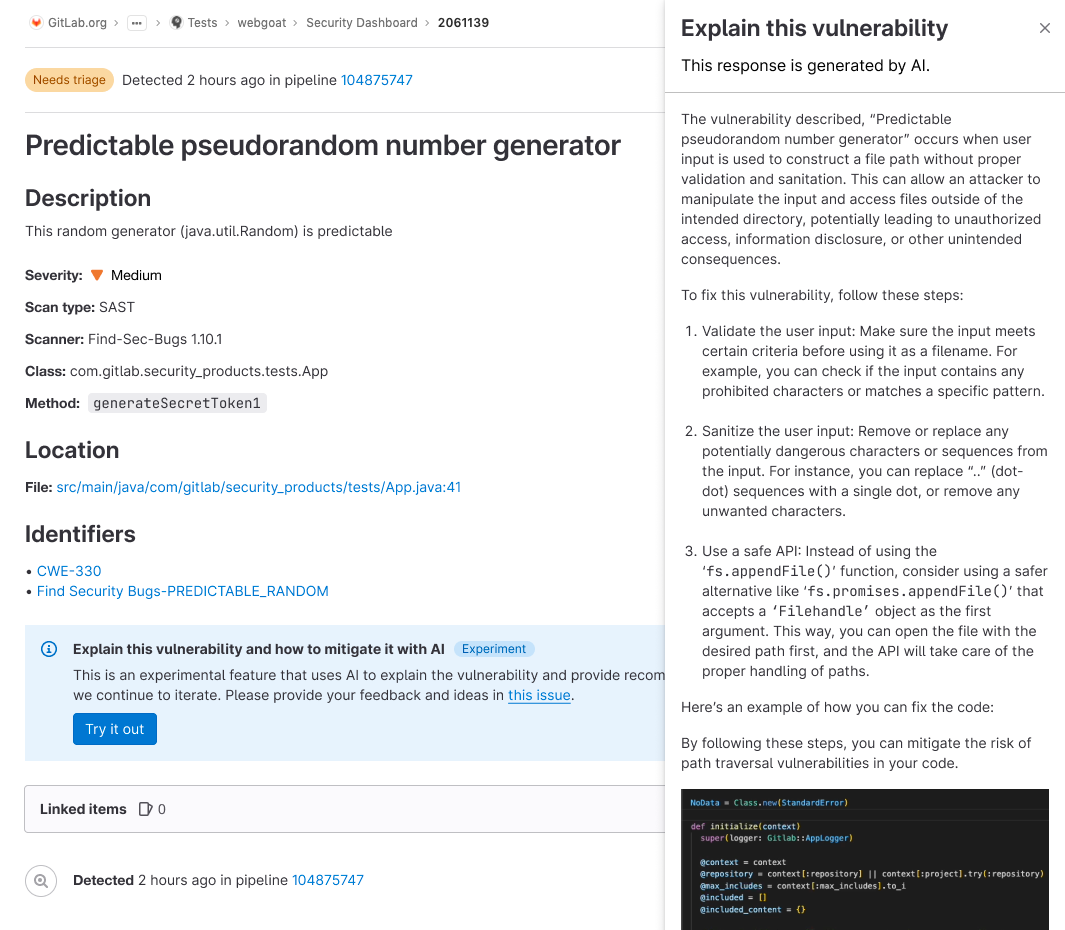
Image Credits: GitLab
The new “explain this vulnerability” feature will try to help teams find the best way to fix a vulnerability within the context of code base. It’s this context that makes the difference here, as the tool is able to combine the basic info about the vulnerability with specific insights from the user’s code. This should make it easier and faster to remediate these issues.
The company calls its overall philosophy behind adding AI features “velocity with guardrails,” that is, the combination of AI code and test generation backed by the company’s full-stack DevSecOps platform to ensure that whatever the AI generates can be deployed safely.
GitLab also stressed that all of its AI features are built with privacy in mind. “If we are touching your intellectual property, which is code, we are only going to be sending that to a model that is GitLabs or is within the GitLab cloud architecture,” GitLab CPO David DeSanto told me. “The reason why that’s important to us — and this goes back to enterprise DevSecOps — is that our customers are heavily regulated. Our customers are usually very security and compliance conscious, and we knew we could not build a code suggestions solution that required us sending it to a third-party AI.” He also noted that GitLab won’t use its customers’ private data to train its models.
DeSanto stressed that GitLab’s overall goal for its AI initiative is to 10x efficiency — and not just the efficiency of the individual developer but the overall development lifecycle. As he rightly noted, even if you could 100x a developer’s productivity, inefficiencies further downstream in reviewing that code and putting it into production could easily negate that.
“If development is 20% of the life cycle, even if we make that 50% more effective, you’re not really going to feel it,” DeSanto said. “Now, if we make the security teams, the operations teams, the compliance teams also more efficient, then as an organization, you’re going to see it.”
The “explain this code” feature, for example, has turned out to be quite useful not just for developers but also QA and security teams, which now get a better understanding of what they should test. That, surely, was also why GitLab expanded it to explain vulnerabilities as well. In the long run, the idea here is to build features to help these teams automatically generate unit tests and security reviews — which would then be integrated into the overall GitLab platform.
According to GitLab’s recent DevSecOps report, 65% of developers are already using AI and ML in their testing efforts or plan to do so within the next three years. Already, 36% of teams use an AI/ML tool to check their code before code reviewers even see it.
“Given the resource constraints DevSecOps teams face, automation and artificial intelligence become a strategic resource,” GitLab’s Dave Steer writes in today’s announcement. “Our DevSecOps Platform helps teams fill critical gaps while automatically enforcing policies, applying compliance frameworks, performing security tests using GitLab’s automation capabilities, and providing AI assisted recommendations – which frees up resources.”
GitLab’s new security feature uses AI to explain vulnerabilities to developers by Frederic Lardinois originally published on TechCrunch
from TechCrunch
In Kochi, PM Modi Slams Left, Cong For `Harming` Kerala Due To Their `Conflict`
PM Narendra Modi expressed confidence that the BJP would be accepted by the people of Kerala in the coming days.
from Zee News :India National
from Zee News :India National
Sunday, 23 April 2023
From Hyderabad, Amit Shah Promises To Scrap Reservation For Muslims In Telangana
Amit Shah also hit out at KCR for not celebrating the 'Telangana Liberation Day" (the day the erstwhile Nizam state merged with Indian Union in 1948) and promised it will be celebrated in a grand manner at Hyderabad's Parade Ground after BJP forms government.
from Zee News :India National
from Zee News :India National
Saturday, 22 April 2023
Sudan Crisis: Several Indians Among 157 People Evacuated To Saudi Arabia
Sudan is facing violence due to fighting between the army and the paramilitary forces. There are reports of violence even amid a 72-hour ceasefire.
from Zee News :India National
from Zee News :India National
India Successfully Carries Out Maiden Flight Test Of Sea-Based Ballistic Missile Defence Interceptor
The purpose of the trial of the sea-based missile was to engage and neutralise a hostile ballistic missile threat, thereby elevating India into an elite club of nations having such a capability.
from Zee News :India National
from Zee News :India National
AI-generated chart toppers, Apple gets into savings, and Microsoft drops Twitter
Hello, friends, and welcome to the latest edition of Week in Review (WiR), the weekly newsletter where we recap the past several days (or so) in tech news. We’d argue that there’s no better way to get your news fix, but we’d be biased. Still! Trust us when we say it’s a labor of love.
Before we get to this week’s happenings, don’t forget that Disrupt, TechCrunch’s annual flagship conference, is on the horizon. This year’s Disrupt will host six — that’s right, six — stand-alone industry TC Sessions events, with stages featuring industry-specific programming tracks. It’ll be well worth the trek to San Francisco.
Ahead of that is our next TechCrunch Live session with SignalFire and ClassDojo. They’ll be discussing ClassDojo’s mission to revolutionize education by building a classroom community.
Now, without further ado!
most read
Fake Drake: A song featuring the voices of Drake and The Weeknd called “Heart on My Sleeve” has amassed more than 250,000 Spotify streams and 10 million views on TikTok. But the two musicians had nothing to do with the song — an artist going by the name “Ghostwriter” generated the song using AI. Amanda has the story.
Apple gets into savings: As of this week, Apple Card customers in the U.S. can open a savings account with Apple and earn up to 4.15% interest. Apple has partnered with Goldman Sachs for the banking feature; the savings accounts are technically managed by Goldman Sachs, which means that they’re covered by the Federal Deposit Insurance Corporation, Romain reports.
Apple considers opening up: Apple has kept the iPhone app distribution system relatively closed so far, allowing users to download apps only from the App Store. But the company might add some gates to its walled garden soon. Ivan reports that Apple is considering letting people sideload apps on iPhones and that we might see some announcement related to that at the upcoming Worldwide Developer Conference in June.
A massive Apple Watch update: The Apple Watch’s software is due to get the biggest update since its release. Sarah, citing a Bloomberg report, writes that the updated watchOS 10 will “bring bigger enhancements” than the releases planned for iPhone, iPad, Mac or Apple TV, including an “updated interface” that will tell you “most of what you need to know about the Apple Watch in 2023.”
Love Is Blind, but sometimes canceled: Netflix had some serious issues with the livestream of its “Love Is Blind” reunion episode, Amanda writes. After a 75-minute delay, the streaming service pulled the plug on the live show due to seemingly unresolvable technical problems.
Microsoft drops Twitter: Microsoft announced this week that it’s dropping Twitter from its advertising platform nearly two months after Twitter announced that it’ll begin charging a minimum of $42,000 per month to users of its API. With its $2.15 trillion market cap and roughly $100 billion cash on hand at the end of last year, Microsoft obviously has the money to pay Twitter what it wants, so the move appears to be a bit of a statement — even as Microsoft is declining to elaborate further about its decision.
Meta lays off more workers: Meta issued another round of mass layoffs this week, Rebecca reports. They’re part of the 10,000 layoffs that CEO Mark Zuckerberg announced in March, many of which relate to “low priority projects.” The mass job cuts are part of a broader restructuring at Meta that Zuckerberg has dubbed the “year of efficiency,” which began with 11,000 layoffs announced in November.
Check-in kiosks no more: Alaska Airlines recently started a three-year, $2.5 billion project to improve the airport experience at its hubs and focus cities like Seattle, Portland, San Francisco and Los Angeles. As a part of the project, the airline is looking to modernize the lobby experience — and as the company announced today, the most visible change here will be the removal of the good old check-in kiosk, Frederic writes.
Snapchat’s AI comes to all: Snapchat’s AI chatbot is opening up to a global audience, the company announced at its Snap Partner Summit this week. Initially launched in February, the feature originally allowed Snapchat’s paid subscribers to chat with an AI chatbot powered by OpenAI’s GPT technology directly in its app. Now it’ll be available for free and upgraded with such functionality as the ability to add the chatbot to group chats, get recommendations for places on Snap Map and Lenses, and share Snaps with the chatbot to receive chat replies. Sarah has more.
Tesla cuts prices: Tesla has cut the price of its Model 3 and Model Y electric vehicles for the second time this month. Tesla’s most popular models will now start under $40,000 before incentives.
audio
Looking for podcast material to pass the time? TechCrunch has you covered, as always. This week, the Equity crew recorded at Early Stage, TechCrunch’s event for founders, and covered topics ranging from rockets to earnings and how a certain company is cutting costs. Over at Found, Trevor Martin, the co-founder of Mammoth Biosciences, came on to discuss how the company is using CRISPR systems to detect and cure genetic diseases. Chain Reaction interviewed Jesse Pollak, the lead for Base and head of protocols at Coinbase. And on the latest TechCrunch Live episode, Mark Batsiyan, a co-founder and partner at Inspired Capital, and Brynne McNulty Rojas, who’s the co-founder and CEO of Habi — the hot real estate startup out of Colombia that reached unicorn status last year — talked about their respective experiences in tech.
TechCrunch+
TC+ subscribers get access to in-depth commentary, analysis and surveys — which you know if you’re already a subscriber. If you’re not, consider signing up. Here are a few highlights from this week:
Photonics and AI: The growing compute power necessary to train sophisticated AI models such as OpenAI’s ChatGPT might eventually run up against a wall with mainstream chip technologies. Are light-based chips, otherwise known as photonics chips, the answer? Maybe, but it’s not clear yet.
There’s always money in the coffee stand: Blank Street claims to have cracked the code on how to make a chain of more than 65 physical coffee shops have the right metrics to attract venture capitalists. They recently closed on a $20 million Series B round in a year where fundraising has taken a nosedive — even for companies with low overhead costs. Rebecca has the story.
Should you launch an AI startup?: It seems like it’s the best of times for founders thinking about launching an AI startup, especially with OpenAI releasing ChatGPT to the masses. But it could be the opposite, depending on which investors you ask. Ron tries to get to the bottom of it.
AI-generated chart toppers, Apple gets into savings, and Microsoft drops Twitter by Kyle Wiggers originally published on TechCrunch
from TechCrunch
Same-Sex Marriage: `SC`s Haste Could Lead To New Disputes`, Says VHP
VHP Joint General Secretary Surendra Jain expressed apprehension the top court's actions could lead to "new disputes".
from Zee News :India National
from Zee News :India National
President Droupadi Murmu, Tirupati Seer Meet At Raj Bhavan, Women Empowerment Discussed
During the meet, President Droupadi Murmu praised Sidheshwar Brahmrishi Gurudev efforts to create a more peaceful and equitable society, where every individual can thrive and fulfil their potential.
from Zee News :India National
from Zee News :India National
Friday, 21 April 2023
SpaceX’s successful failure is a wake-up call for Starship’s timeline
SpaceX launched a fully integrated Starship launch vehicle for the first time on Thursday morning, a long-awaited and highly anticipated milestone in the vehicle development program.
The orbital test flight surpassed many expectations. The vehicle cleared Max Q – the point at which the most aerodynamic pressure is exerted on the vehicle – and flew for nearly three minutes despite 8 of its 33 rocket engines failing. The rocket reached an altitude of almost 40 kilometers, the point of stage separation, at which time the upper stage failed to separate from the booster, leading to uncontrolled tumbling and a spectacular mid-air explosion.
Despite its fiery fate, the test was a success: SpaceX got tons of valuable data that will inform future Starship and Super Heavy prototypes. But for all the wins, the test was a stark reminder that Starship mission timelines are in need of a reset.
Tempering expectations
The Starship’s attempt at an orbital launch showed impressive progress, but also that the company still has a long way to go before it achieving its super-heavy launch ambitions.
Beyond the technical issues with the rocket itself, the sheer power of the Raptor engines at take-off produced a massive crater underneath the orbital launch mount. It’s unclear how much work will be required to repair the site, or if it can be salvaged at all. Either way, ground infrastructure issues could impose significant delays to later tests — perhaps delaying the next one by months.
SpaceX currently has three private human spaceflight missions on its Starship manifest. Those include Japanese billionaire Yusaku Maezawa’s dearMoon flight around the Moon, the third mission in billionaire Jared Isaacman’s Polaris Program, and a separate lunar mission later this decade, for which entrepreneur Dennis Tito and his wife Akiko purchased two seats.
Of these, only dearMoon has a launch date: later this year. This was optimistic to begin with when they announced it in 2021, but now it seems downright ludicrous.
SpaceX has also won lucrative contracts with NASA, performing a crucial role in the Artemis lunar landing program. Artemis III will see astronauts launch to space inside an Orion atop a Space Launch System vehicle, after which they will rendezvous with a Starship human landing system. From there they will travel to the lunar surface and back — but whether that can be achieved as planned in 2025 is doubtful.
Between now and then, SpaceX must fly at least one uncrewed Starship and land it on the lunar surface before NASA can deem the vehicle ready to carry astronauts. The Artemis III plan also involves SpaceX sending up multiple reusable tankers and a propellant storage depot, with Starship refueling on-orbit to ensure to can make all the orbital burns required for the mission. All of these components of the mission are affected by delays to the core Starship testing program.
Needless to say, the plan is enormously complicated. SpaceX will not need to send Starship to orbit once, but again and again. It will have to prove out a high degree of safety before NASA allows astronauts to fly on it, demonstrate on-orbit refueling, and achieve reusability. At this pace, it’s more realistic to hope for Artemis III happening any time before 2030.
Does that mean NASA made the wrong choice in selecting SpaceX for its human landing system, or that Maezawa and Isaacman bet on the wrong horse? Not at all. But it does mean that all of us should temper our expectations about what the rest of this decade might hold for human spaceflight.
SpaceX’s successful failure is a wake-up call for Starship’s timeline by Aria Alamalhodaei originally published on TechCrunch
from TechCrunch
`Then Who Killed Them?`: Pawar On Acquittal Of All Accused In Naroda Gam Case
Questioning the acquittal of all accused in Naroda Gam Massacre Case, NCP Chief Sharad Pawar alleged misuse of power by the people who are in the government.
from Zee News :India National
from Zee News :India National
`Daughter Of Assam`: Himanta Sarma Backs Angkita Dutta Amid Harassment Row
Assam Chief Minister Himanta Biswa Sarma on Friday commented on former state IYC chief Angkita Dutta's allegations on national youth Congress president Srinivas B.V.
from Zee News :India National
from Zee News :India National
Thursday, 20 April 2023
Let’s work together
There are about four duck boats lined up directly across the street from this coffee shop. Boston has a knack for reminding you where you are, should you get bonked on the head and suddenly forget what city you’re in. This is a far more truncated visit than the last time. Most likely as you’re reading this, TechCrunch Early Stage Boston will be well underway.
I carved out a bit of time on either side of the event to meet some of the folks I didn’t get to see last time. I’ve got a few universities, research institutes and startups on the list. I’ll jump at pretty much any excuse to get back to Boston and Pittsburgh these days (let me know if there’s a good one for the latter in the next few months).
Oh, and I’ve recently decided to swing by Detroit at the end of next month, so if there’s anything I definitely need to check out, let me know (accepting that our definitions of “definitely” may vary a good deal).
Heading over to MassRobotics shortly, after a recent Zoom call with Tom Ryden, the org’s executive director. I’d been wanting to talk interoperability since my recent trip to ProMat. It’s something I’ve regrettably not yet managed to highlight in any sort of meaningful way in Actuator, so we’ll be making up for that today.
As discussed the other week, along with autonomous mobile manipulation, cross-platform interoperability is a major holy grail for the industry. As companies increasingly push toward fully autonomous warehouses, the realization is no doubt quickly dawning that the goal can’t be achieved by relying on a single company.
Will the day come when robotics firms will offer true top-to-bottom solutions? Maybe? Getting there would take a long time and a hell of a lot of money — be it through in-house R&D or acquisition (likely both). From what I’ve seen, most ARM firms in the space are largely focusing on their current addressable market (which is admittedly massive), rather than rushing into additional segments of the market. Amazon’s certainly pushing for it, but economic belt-tightening aside, a fat lot of good that’s going to do all of the non-Amazon companies out there.
For the foreseeable future, increased automation means working with more robots from more companies. That presents the very real problem of interoperability. Put in the plainest language, you don’t want to suddenly find yourself tasked with running a warehouse of robots that don’t know how to work together.
There are a lot of companies working on fleet management software, which we’ve talked about in the past and will, no doubt, talk about again soon. This week, however, I’m interested in something I’ve written about a lot with my consumer electronics hat, but very seldomly with the robotics one (it’s shaped like R2-D2. Got it on discount after Halloween). So we’re going to be kicking things off with the Q&A, then some more VC survey results, job listings and then back to your regularly planned roundup.

Image Credits: Hi, this is a meme.
Q&A with Tom Ryden
TC: Why did MassRobotics take this problem on?
TR: We took this on a couple of years ago, when we were talking to a lot of the manufacturers and customers of AMRs. It was clear that there isn’t going to be one solution. There isn’t going to be one AMR that does everything. We were starting to see things like AMRs and robotic floor cleaners get out there and we heard from major customers saying, “This is a problem. We have all of these platforms. We have to somehow manage them all in a better way. They’re all independent and they don’t speak to each other.”
So we looked around and didn’t see anything. [We asked if] we could help and create a very low lift, very simple standard. It’s really a data exchange standard. Here’s a common way to broadcast information from each AMR and then we can have other companies develop software packages that display all of the different platforms and give you statistics on the systems and how they’re performing.
We released that about a year and a half ago. It’s a pretty simple standard. We’re working now on the next vision. That will add complexity. What we didn’t do in the first one is task management or “tasking.” There was no ability for third-party software to go in and control any of the robots. Part of that is because none of the AMR vendors wanted that. They all have their own traffic management systems. They all believe their traffic management systems do the best for their systems and are optimized for their systems. I don’t disagree. Now we’re trying to work on a way that there will be some ability to manage different platforms without interfering with their set directions.
You’re creating both the standard and the software?
No. We are trying to provide software only as example. Sometimes it’s helpful to get example code for how you would implement this. Our standard is more guidelines. If you adopt the standard, you can interoperate with other systems that are operating in the same area that you are.
What does it mean for them to communicate? I assume it’s not robot to robot?
They’re not doing it robot to robot. They’re just sending a broadcast for anybody who wants to read it. We have a standard communications protocol, so anybody that has the ability to gather that data can.
So I’m running a warehouse and now have something that allows them all to appear on the same map.
Correct. And you can see how all of the different vendors are operating on one system. The people who are developing the third-party software are getting a lot of different information about the robot. They can show how things are performing in your warehouse and gather different things that are helpful for the warehouse operator to understand.
VC Survey
Returning to the recent robotics VC survey, here’s this week’s question:
TC: How is robotics investing different than in previous years? What role have the pandemic, slowing economy and recent bank crisis had on your investments?
Kelly Chen, DCVC: The last few years have been a series of changing concerns as well as opportunities. After the major hardware supply chain issues, startups are learning to eliminate single points of weaknesses (i.e., bottlenecks to shipping products). This comes with sacrifices to the design and cost in the near term, but it will prepare robotics startups for strong and robust scaling in the long-term.
A slowing economy usually means corporate customers are less willing to make large capital investments to solve their short- to medium-term labor problems, but robotics startups are increasing pushing for a recurring pricing model (robotics as a service) or a price per pick model, allowing customers to pay with a smaller lump sum and OPEX over time.
As for the bank crisis, robotics startups often secure venture and equipment debt, so we are happy to see new banks step up to provide these types of services to the startup community.
Rohit Sharma, True Ventures: I think the exuberance of 2021 and 2022 has given way to more rational exchanges between investors and founders. There is a renewed focus on the customer instead of growth or pure-technology, and there is an element of excitement about how fast-developing techniques in the machine learning and AI domain might play a role in delivering more effective robots. On the customer interaction front, there is a bit more of a focus on what value it delivers to them, and how quickly is that value going to make a difference in the customer’s operations.
Kira Noodleman, Bee Partners: COVID-19 has urgently shown us a glimpse of a more roboticized, automated, resilient future of work that extends across the supply chain and beyond the mission critical. While this trend started in manufacturing, it has now moved well beyond into areas like healthcare, R&D, agriculture, waste management and many more.
Our current volatile economy has made investors demand asset-lighter, often software-powered hardware solutions that bear less risk given the increased nimbleness of said solutions. What feels new today in automation is how quickly and flexibly you can set up a system to work. And there is an increasing industry acceptance that if it is too expensive to automate, it might as well be not possible (because everything technically can be automated). Globally, shifts in recent years have added pressure to the U.S. to step up its game.
The average robot per 10,000 workers globally is 141 (source: IFR). In the U.S., we’re at 244 (above average), but there are six countries ahead of us: China just passed us (350), and the No. 1 is Korea (1,000!) — clearly they are a manufacturing juggernaut. Yet, the U.S. has the largest GDP in the world, and this feels unacceptable.
More next week!
News

Image Credits: Noah Medical
Here’s an extremely healthy round for Noah Medical. The Bay Area–based firm this week announced a $150 Series B led by Prosperity7 Ventures and featuring Tiger Global, along with Hillhouse, Sequoia China, ShangBay Capital, UpHonest Capital, Sunmed Capital, Lyfe Capital, 1955 Capital and AME Cloud. It probably won’t shock you to hear that it was an oversubscribed round.
But robots are expensive, and medical robots are very expensive. Noah’s flagship product is the Galaxy System, which is used to more accurate pinpoint nodules for lung biopsies.
“We are a mission driven startup and appreciate our investors’ support to allow us to scale and deliver on the future of medical robotics,” founder and CEO Jian Zhang said in a release. “Next generation robotics platforms like the Galaxy System are filling procedural gaps to provide superior clinical values to better serve customers’ needs. We are excited to welcome these investors to the team and are eager to grow and serve even more patients and clinicians.”
The funding was, no doubt, helped along by the fact that the system received FDA clearance last month. It has also begun human trials at Sydney, Australia’s Macquarie University Hospital.

Image Credits: CMU
Search and rescue is a big applications for autonomous robotic systems. Legged robots are becoming increasingly more sophisticated and better at navigating uneven terrain, but there are still a number of scenarios that present issues. A team at CMU is tackling one, taking on these systems’ ability to balance on narrow spaces.
In the lab, that means teaching a dog robot how to walk a balance beam. The solution? Mounting a big flywheel to the dog’s back.
Says CMU:
Manchester said it was easy to modify an existing control framework to account for the RWAs because the hardware doesn’t change the robot’s mass distribution, nor does it have the joint limitations of a tail or spine. Without needing to account for such constraints, the hardware can be modeled like a gyrostat (an idealized model of a spacecraft) and integrated into a standard model-predictive control algorithm.
Jobs
And finally, some job listings. Here’s a form to get into next week’s Actuator.
Robotics jobs for human people:
Bear Robotics (57 roles)
Brain Corp. (12 roles)
Formic (12 roles)
Kewazo (8 roles)
Vecna Robotics (3 roles)

Image Credits: Bryce Durbin / TechCrunch
Subscribe to Actuator. Come on, work with me on this.
Let’s work together by Brian Heater originally published on TechCrunch
from TechCrunch
Subscribe to:
Posts (Atom)